

Quick answer
To get brand sponsorships as an influencer, make your profile and last nine posts show steady engagement, then pitch the right contact with proof. Use spec posts, LinkedIn-found PR emails and a gifted-to-paid upsell, with clear disclosure at every stage.
Brands don’t pay for follower counts alone. They pay creators whose audiences respond, whose content suits the product and who make the deal easy to run. Often the gap is targeting and evidence rather than creativity. This guide sets out a five-step process for UK and US creators and micro-influencers, from profile audit to paid partnership.
Before you start, understand the two routes, because each needs different preparation.
| Inbound: brands contact you | Outbound: you pitch brands | |
|---|---|---|
| How it starts | A brand finds your profile or content and gets in touch | You research a brand and contact its PR or partnerships team |
| What you need first | A clear niche, a business email in your bio and an up-to-date media kit | A target list, the right contact and a short, specific pitch |
| Main advantage | The brand has already shown interest, so you start from a stronger position | You choose the brands, timing and angle |
| Main risk | Offers can be low-paid, product-only or outside your niche | Pitches often go unanswered, so follow-up and tracking matter |
| Check before saying yes | Deliverables, usage rights, payment terms and whether everything is in writing | The brief, budget and approval process before you create anything |
Step 1: Audit Your Profile Through a Brand Manager’s Eyes
Before you pitch anyone, a brand usually asks three questions: what you cover, who follows you, and how to reach you. Review your profile against those questions, and fix anything that leaves a gap before you send a single email.
Start with your niche. A bio that says “lifestyle, travel and wellness” tells a brand very little. One that names what you make and who it’s for, such as “Honest skincare reviews for oily skin, UK audience”, gives a brand a reason to shortlist you. Make your audience location visible too, because brands targeting UK or US customers want audiences in those markets.
Next, calculate your engagement rate. Add the likes and comments on your recent posts, divide by your follower count and multiply by 100. Compare that figure with your own earlier results rather than with other accounts, since good rates vary by niche and platform. A steady or rising trend tells a brand more than one viral post.
Finally, make contact easy. Add a business email to your bio and a short media kit with your audience data and best work. Then read how brands find and vet top creators for ROI to see the checks your profile is likely to face.
Step 2: Build Social Proof Across Your Last Nine Posts
Your last nine grid posts work as a sponsorship CV, since they’re the latest evidence a brand can scan. Aim for steady likes, comments and saves across all nine rather than one standout post, and make sure they reflect the niche you’re pitching.
If your recent grid is quiet, post with a clear purpose for six to eight weeks and reply to every comment. Consistency beats spikes: nine steady posts make a stronger case than one viral Reel surrounded by weak ones.
Before and after: a skincare creator’s example
A US skincare creator with 4,100 followers was sending around 30 cold emails a month and getting no replies. Her last nine posts each had under 60 likes, giving brands little reason to respond. She used SoldOutX influencer packages to grow to 7,500 followers, and her three spec product Reels reached 300+ likes and saves. She emailed the performance links to 10 PR managers found on LinkedIn, received four replies and closed $1,100 in sponsorships.
What she sent brands was proof of engagement on specific Reels, not a follower total, and that is what a brand needs to see.
Some creators look at paid services to speed this up. SoldOutX’s influencer section is one place to look if you’re establishing sponsorship credibility via SoldOutX, but judge any offer by the engagement it delivers. Avoid buying a grow your follower count with SoldOutX package as a shortcut. Bought followers generally don’t like, comment or save, and the gap between follower count and engagement is exactly what brand audits look for.
Step 3: Create Three Spec Posts Tagging Dream Brands Organically
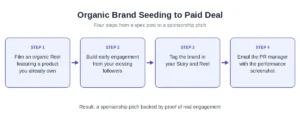
A spec post is a Reel featuring a product you already own, made in your usual style and tagged to the brand. It shows what your content could do for that product with no commitment, and gives you proof to attach to a pitch.
Make three spec posts, each using a product you bought yourself. Under UK and US rules, a product you bought with your own money and have no relationship with the brand doesn’t need disclosure. If a brand sent you the product, the post becomes a gifted one and needs clear disclosure, as Step 5 explains.
Share the post to your Stories, reply to every comment in the first few hours, then tag the brand in the Reel and Story. Avoid like-for-like swaps with other accounts: platform policies restrict them, and audits can spot the pattern.
Step 4: Find Decision-Maker Emails on LinkedIn
A generic info@ address may never reach the person who handles creator partnerships. Find a named PR or influencer marketing manager instead, using the brand’s press pages and LinkedIn, and send a short, specific message to that person.
Start with the brand’s own website. Many brands publish a press or media page that names a contact or lists a press address, and some work through a PR agency that the page may name. Then search LinkedIn for titles such as PR manager, influencer marketing or brand partnerships at that company. Open a few profiles to confirm the person still works there and covers your market.
Use only addresses the brand publishes or a named contact confirms. If none is available, send a short LinkedIn message rather than guessing. Keep the note to three things: who you are and where your audience is, a link to your spec-post results, and one question about whether they work with creators in your niche. Follow up once after a week, then stop.
Step 5: Convert “Gifted” Product Offers into Paid Sponsorships
A gifted product can become a paid partnership if you treat it as a trial. Post it with clear disclosure, share the results and propose a paid three-month partnership with fixed deliverables. Both UK and US rules require disclosing free products.
Disclosure comes first. In the UK, the Advertising Standards Authority (ASA) treats free products as payment in kind, and the caption should begin with “Ad”, for example “Ad – gifted”, as Osborne Clarke’s summary of ASA guidance explains. The word “gifted” on its own isn’t accepted. In the US, the Federal Trade Commission expects a clear, hard-to-miss statement such as “Thanks [Brand] for the free product”, and a platform’s built-in disclosure tool may not be enough on its own. Seyfarth’s summary of the FTC rules covers the details.
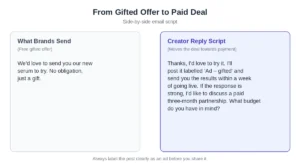
Use the reply below as a starting point. It accepts the offer, sets out your disclosure and moves the conversation towards payment.
| What brands typically send | A reply that moves towards a paid deal |
|---|---|
| “We’d love to send you our new serum to try. No obligation, just a gift.” | “Thanks, I’d love to try it. I’ll post it labelled ‘Ad – gifted’ and send you the results within a week of going live. If the response is strong, I’d like to discuss a paid three-month partnership. What budget do you have in mind?” |
Once the gifted post is live, move it towards a paid deal in three steps:
- Deliver well. Post within the agreed window, disclose clearly and reply to comments on day one.
- Report the results. Within a few days, email the brand your reach, engagement and any link or discount-code data, with screenshots, and say what your audience responded to.
- Propose the partnership. Offer a three-month arrangement with a fixed monthly fee, a set number of posts and clear usage terms. Ask about the brand’s budget before naming a figure.
Price by deliverables and usage rather than follower count. FYPM, a creator pay-transparency platform, says its data shows pricing doesn’t reduce to dollars per follower, and its 2023 benchmark found the median cost per brand deal fell 18% that year, according to an interview with The Leap. Rates move, so quote for the work you’re actually delivering.
Top 5 Creator Platforms to Apply for UK & US Sponsorships Today
Marketplaces can bring in brand work without cold outreach, but they differ in pay model, eligibility and how much control you keep. Check each platform’s current criteria before applying, because eligibility rules change and some assess engagement or follower levels.
The options below are a starting point. Pick one or two to begin with rather than applying everywhere, and keep your Step 2 metrics current, since marketplaces review them too.
| Platform | How it works | Best for | Watch-outs |
|---|---|---|---|
| Insense | Brand-managed UGC and influencer campaigns. The platform works with creators in the US, UK and other markets. | Creators who want structured briefs and less negotiation | Each brand sets its own campaign terms, so pay varies. |
| Amazon Influencer Program | Commissions on qualifying purchases made through your recommendations and storefront links. Available in the US and UK. | Creators who regularly recommend products | Income depends on sales, so there’s no guaranteed fee. Amazon assesses content quality, engagement and follower count. |
| TikTok Creator Marketplace | TikTok’s official space for paid partnerships, open to creators in the US, UK and other markets. | Creators with an established TikTok presence | Access depends on eligibility checks in the app, and parts of the marketplace are invitation-based. |
| Collabstr | Brands search for creators and book them through the platform. | Creators who want a self-serve marketplace | Check which countries it accepts and how its fees work. |
| Influee | A marketplace for brand deals and UGC-style work, with a UK-specific site. | Creators open to short-form content briefs | Most available information comes from the platform itself, so check fees and terms directly. |
Frequently Asked Questions
These questions cover the sticking points in this guide: first sponsorships, gifted products, paid upgrades, finding contacts and why brands check recent posts. Each answer stands alone, so you can jump straight to the one you need.
How do small influencers get their first brand sponsorship?
A first sponsorship is easier to land with a clear niche, steady engagement and a short pitch to one brand. Start with products you already use, offer a spec post as evidence, and accept a modest fee to build your record.
Should you accept free gifted products from brands in 2026?
Often yes, if the product suits your audience and you can disclose it clearly. Free products count as a connection under UK and US rules, so label the post clearly as an ad. Decline anything you wouldn’t genuinely recommend.
How do you turn a gifted collaboration into a paid brand deal?
Deliver the gifted post with clear disclosure, then send a short performance summary with screenshots of reach, engagement and any link results. Propose a three-month paid partnership with fixed deliverables, and ask about the brand’s budget before naming a fee.
Where do you find PR and influencer marketing manager email addresses?
Check the brand’s press or media page first, as it may name a contact or list a press address. Then search LinkedIn for PR or influencer marketing titles at the company. If no email is published, send a LinkedIn message rather than guessing.
Why do brands check your last nine grid posts before replying to pitches?
Your last nine grid posts are the most recent sample of your content and audience, showing whether engagement is steady and your niche fits the product. A weak run makes a pitch harder to justify, even with a strong follower count.
Final Verdict
Getting brand sponsorships as an influencer comes down to evidence, targeting and follow-through. Build a profile and last nine posts that show real engagement, pitch the right contact with proof, and treat gifted offers as trials for paid work, with clear disclosure at every stage.
There’s no shortcut that holds up under scrutiny. Bought followers, generic inbox pitches and undisclosed gifts may get a reply, but they damage trust and undermine the evidence you need. Start this week with Step 1: rewrite your bio, calculate your engagement rate and pick three products for spec posts.

Discussion