
 By Oliver Sterling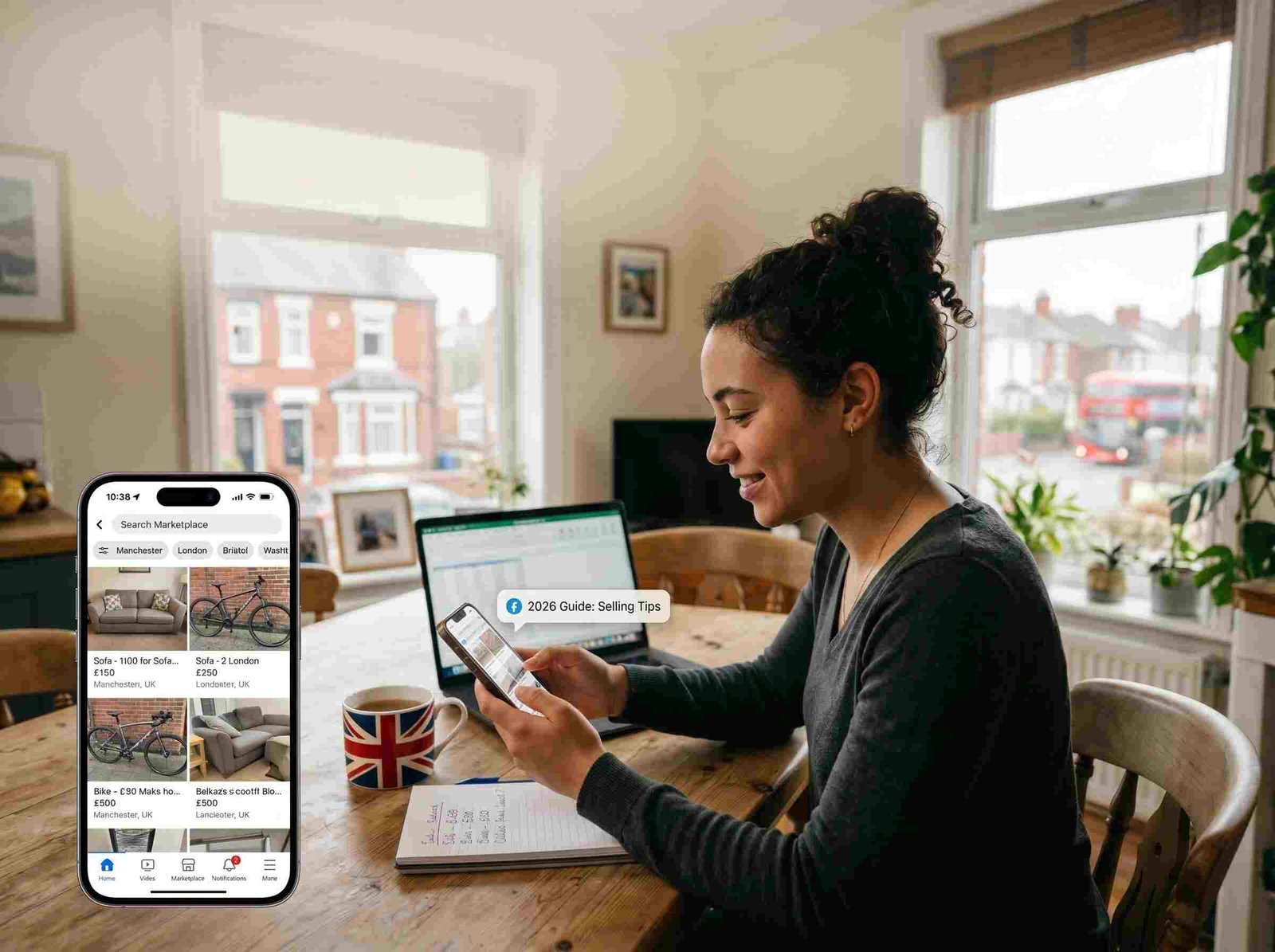
Facebook Marketplace is one of the most popular places to buy and sell in the UK. It is free to use and easy to get started. With more than 55.9 million Facebook users in the UK as of late 2026, and around 60% of UK Facebook users actively using Marketplace, the platform connects millions of buyers and sellers every single day. The typical sale on Facebook Marketplace in the UK averages around £100, and more than 1 million new items are listed every day across the country.
Whether you want to clear out old furniture, find cheap electronics, or earn extra income on the side all without paying listing fees this guide covers everything. From step-by-step selling instructions and verified fees, to scam warnings backed by UK bank data and HMRC tax rules for 2025/26.
What you’ll find in this guide:
- How to create and optimise your listings
- The best items to sell (and the best times to list)
- Verified fee breakdown including the 2024 fee change
- Real UK scam statistics and how to protect yourself
- HMRC tax rules for online sellers in 2025/26
- How Marketplace compares to eBay, Vinted, and Gumtree
- Algorithm tips to get more views
What Is Facebook Marketplace UK?
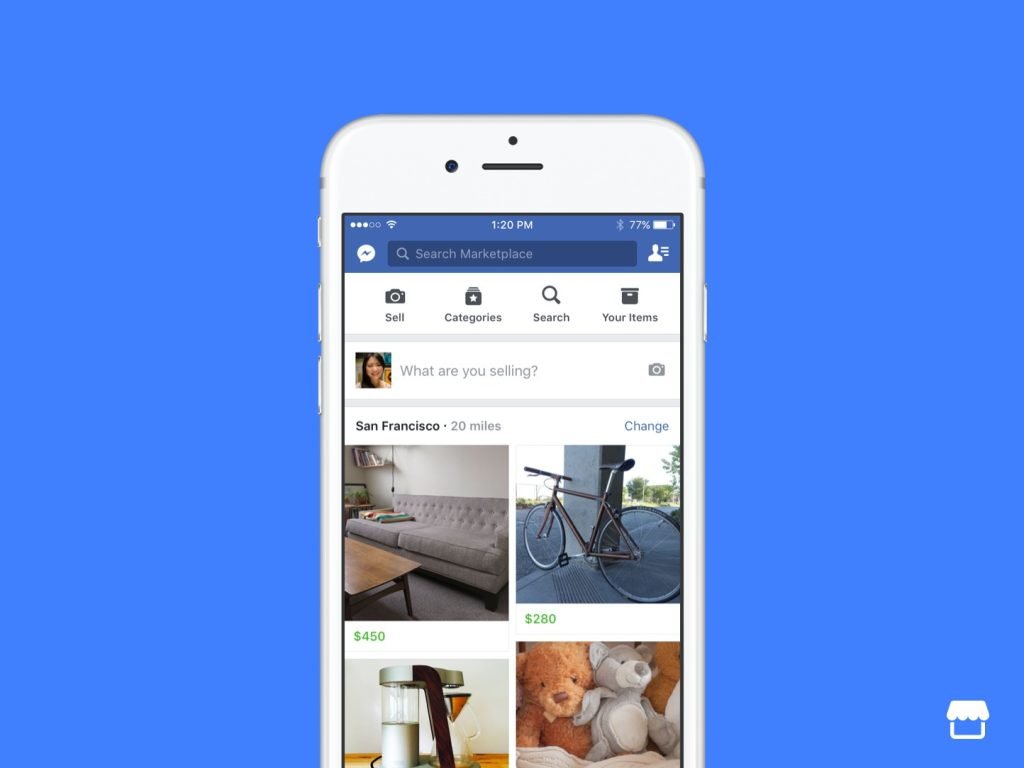
Facebook Marketplace is a free buying and selling tool built directly into Facebook. You can access it through the app or website. Launched in the UK in October 2016, it works differently from eBay or Amazon. Most deals happen locally. You list an item, a buyer contacts you, you agree on a price, and the deal is done usually in cash or through a payment app, with no platform fee involved.
Globally, Marketplace reached 1.2 billion total users in 2024, with 1.1 billion visiting monthly. It holds a 51.19% share of all social commerce activity worldwide more than Instagram and Facebook Shops combined. Closer to home, around 70% of UK Marketplace sellers are private individuals, with 30% being businesses.
For UK sellers and buyers, one of the biggest advantages is the trust signal your Facebook profile provides. Unlike anonymous classifieds, buyers can see your account history, mutual friends, and seller ratings before they message you. Tools like SocialMention offer practical guides on building your social presence to make the most of platforms like Marketplace.
How to Sell on Facebook Marketplace UK: Step by Step
Getting your first listing live is simpler than most people expect. Just follow these steps.
- Open the Facebook app or go to the website. Tap the Marketplace icon it looks like a small shop. If you cannot see it, tap See More in the menu.
- Tap Create New Listing and choose the type of item. Most people sell items. You can also list vehicles, properties, or jobs.
- Add up to 10 photos. Make sure they are clear and show the item from multiple angles. If there is any damage or wear, photograph it honestly. This reduces disputes later.
- Write a clear, specific title. Instead of “phone for sale,” try “Samsung Galaxy S24, 128GB, Black, Unlocked, Excellent Condition.” Specific titles rank better in Marketplace search and attract more serious buyers.
- Write a detailed description. Include brand, size, colour, condition, and reason for selling. The more information you include, the fewer back-and-forth messages you will need to handle.
- Set a price. Search similar completed listings and use the Sold filter to see what items actually sold for not just what sellers are asking. Pricing slightly below comparable sold listings leads to faster sales.
- Add your location. Facebook will not show your exact address. Choose local pickup only, or enable shipping for smaller items. Shipping through Facebook’s checkout system adds a selling fee (see the Fees section below).
- Publish your listing and reply promptly. Once live, buyers will message you via Messenger. Sellers who respond quickly earn a Very Responsive badge, which increases buyer trust and can improve listing visibility.
Promote Your Listing
You have two options to boost reach:
- Share for free in relevant Facebook Groups local buy/sell groups, community pages, and category-specific groups. This costs nothing and can significantly increase views overnight.
- Use paid listing boosts. These start from around £3 per day and show your listing to a broader local audience who may not already follow local groups.
Best Things to Sell on Facebook Marketplace UK (2026)
Some categories consistently outperform others on the UK Marketplace. Based on verified sales data from SHOPLINE and WifiTalents, the top-performing categories in the UK are:
| Category | Why It Sells Well | Timing Tip |
| Furniture & Home Décor | High demand, hard to find new locally | Year-round; spike in Jan/Sep |
| Electronics & Gadgets | Strong buyer intent, quick turnaround | Peak before Christmas |
| Branded Clothing & Accessories | Fashion-conscious buyers seek deals | Spring/Summer collections |
| Baby & Kids Gear | Parents buy frequently, items grow out of fast | Year-round |
| Cars & Vehicles | Largest single scam risk sell carefully | Spring uplift |
| Garden Tools & Bikes | Seasonal; very popular locally | March–June |
| Books & Collectibles | Bundle for higher perceived value | Year-round |
Timing matters. List garden items from March onwards, winter clothing in early autumn, and electronics in October and November. Saturday mornings and weekday evenings are the busiest browsing periods on the platform.
How to Buy on Facebook Marketplace UK: Buyer’s Guide
Millions of UK users use Marketplace purely for buying. Here is how to find great deals safely.
- Use the search bar with specific terms. Filter by location, price range, category, and condition. For large items like furniture, set your search radius to within a few miles. Use “Sort by Newest” to beat other buyers to fresh listings.
- Negotiate politely. It is standard practice to offer below the asking price, especially on listings that have been up for a while. Sellers are far more responsive to respectful, straightforward offers than to lowball messages.
- Always meet in a public place during daylight hours. Take someone with you if you are visiting a private address. Inspect the item carefully before handing over any money. If it differs from the photos, you are under no obligation to buy.
- Use buyer-safe payment methods. Cash is safest for local deals. If paying digitally, use PayPal Goods and Services (not Friends & Family), which provides dispute resolution. Never pay by bank transfer to a stranger.
Facebook Marketplace UK Fees: What You Actually Pay in 2026
One of Marketplace’s biggest draws is its low fee structure. However, the fees changed significantly in April 2024. Here is the accurate, verified breakdown:
| Sale Type | Fee | Notes |
| Local pickup (cash/external payment) | Free — no fees at all | Most common UK transaction type |
| Shipped via Facebook Checkout | 10% of total sale (inc. shipping) | Updated April 2024; was 5% before |
| Minimum fee (shipped) | £0.80 equivalent per order | Applied when 10% would be less |
| Paid listing boosts | From £3 per day (optional) | Increases local audience reach |
| Facebook Shops sellers | 10% selling fee on shipped orders | Same as Marketplace shipped rate |
Important: The 10% fee on shipped items was introduced on 15 April 2024, replacing the previous 5% rate. This applies in the UK as well as the US and Canada. Local pickup sales remain completely free which is why most UK sellers prefer cash-in-hand local deals.
Pro tip: If you are selling something worth more than £20 with shipping, always use tracked delivery. This protects both you and the buyer if a dispute arises. For items you want to sell fee-free, arrange local pickup and agree on payment outside Facebook’s checkout system.
Facebook Marketplace Scams UK: How to Stay Safe
Scams on the Marketplace are more common than many people realise. UK bank TSB reported that 73% of all purchase fraud cases they handled originated on Facebook Marketplace, and their fraud team found that 34% of a sample of 100 Marketplace adverts were fake (TSB / Fresh Business Solutions, 2024). Santander data from 2024 shows the average UK victim of a Facebook Marketplace purchase scam lost £647.
Common Scams to Watch For
- Deposit scams seller asks for money upfront to “reserve” an item, then disappears
- Fake payment screenshots scammer sends a forged image to look like payment has cleared
- Phishing links via Messenger designed to steal your login credentials
- Underpriced car listings Santander found 25 sellers posting around 4,000 fake vehicle adverts in just 30 minutes in 2023; nearly £480,000 was lost to Facebook car scams in 2023 alone
- New accounts with no history or reviews — a consistent red flag
- Requests to move conversations off-platform to WhatsApp or email
How to Protect Yourself
- Check how old the seller’s account is before engaging
- Never pay by bank transfer to someone you do not know
- Use cash for local deals, or PayPal Goods and Services for added protection
- See the item in person before handing over money
- If something feels off, trust your instincts and walk away
UK Legal Rights: Authorised Push Payment (APP) Fraud
As of October 2024, UK banks are legally required to reimburse victims of Authorised Push Payment (APP) fraud under rules introduced by the Payment Systems Regulator (PSR). If you are scammed, call your bank immediately and report it to Action Fraud on 0300 123 2040.
HMRC Tax Rules for Facebook Marketplace UK Sellers (2025/26)
HMRC stands for His Majesty’s Revenue and Customs, the UK body responsible for collecting taxes. Here is what UK Marketplace sellers need to know for the 2025/26 tax year.
- Selling your own personal possessions (old furniture, clothing, unwanted gifts) is generally not classified as trading and is not taxable.
- If you buy items specifically to resell for profit, you are considered a trader. You have a £1,000 tax-free Trading Allowance per year on gross income before expenses. This allowance applies to all your combined trading income, not just Marketplace sales.
- Under OECD digital platform reporting rules in force from January 2024, platforms must report your earnings to HMRC if you sell more than 30 items or earn more than €2,000 (approximately £1,735) in a calendar year — even if you are below the taxable threshold (MoneyHelper / MSE).
- If your gross trading income exceeds £1,000 in the 2025/26 tax year, you must register for Self Assessment by 5 October 2026.
Upcoming change: The government has confirmed plans to raise the Self Assessment registration threshold for trading income from £1,000 to £3,000. However, as of April 2026 this has not yet been legislated. The £1,000 Trading Allowance itself remains unchanged (LITRG / FSL Accountancy). Do not assume the higher threshold is in force until officially confirmed.
Facebook Marketplace vs eBay vs Vinted vs Gumtree UK
| Platform | Best For | Seller Fees | Buyer Protection | Audience |
|---|---|---|---|---|
| Facebook Marketplace | Local deals, large items, quick sales | Free locally; 10% on shipped orders | Limited — use PayPal G&S | UK-wide, local focus |
| eBay | Nationwide reach, collectibles, electronics | ~12.8% + listing fees | Strong buyer protection built in | UK-wide + international |
| Vinted | Second-hand clothing only | Free for sellers; buyers pay a fee | Integrated protection | Fashion-focused audience |
| Gumtree | Property, services, larger classified ads | Free to list basic ads | None — buyer beware | UK classifieds audience |
Facebook Marketplace Algorithm: How to Get More Views on Your Listings
Facebook does not publish its ranking algorithm, but consistent data from sellers reveals several practices that improve listing visibility:
- Renew your listings every 7 days. Refreshed listings are re-indexed and shown to new audiences.
- Use specific, keyword-rich titles. Buyers search for exact terms like brand names, sizes, and conditions. Mirror how buyers search, not how sellers describe.
- Upload high-quality photos. Listings with clear, well-lit images from multiple angles receive significantly more engagement.
- Respond to messages quickly. Facebook’s Very Responsive badge is awarded to sellers who respond within minutes and is a visible trust signal to buyers.
- Share listings in relevant Facebook Groups. This is free and extends your reach beyond the Marketplace feed immediately.
- Enable shipping where appropriate. UK sellers who enable shipping can now sell to buyers anywhere in the country, not just locally. Carriers used include Royal Mail, DHL, and Evri.
Final Thoughts: Is Facebook Marketplace UK Worth Using in 2026?
Yes. Marketplace remains one of the most practical and cost-effective platforms for buying and selling in the UK in 2026. Local sales are completely free. The audience is already over 55 million UK Facebook users and around 18% of them actively use Marketplace. Your Facebook profile acts as a natural trust signal that anonymous classifieds simply cannot replicate.
The sellers who consistently do well here share a few habits: they price items fairly based on what things actually sell for (not just asking prices), keep their listings fresh by renewing them regularly, and reply to buyers quickly. The platform rewards engagement.
If you are new to Marketplace or want to sharpen your approach, SocialMention.uk publishes regularly updated guides on social commerce strategy, platform changes, and safe selling practices across all major UK platforms. It is a useful reference to bookmark alongside this guide.
Frequently Asked Questions
Why is Facebook Marketplace not working or showing up for me?
This usually happens if your app is outdated, your account is newly created (under 30 days old), or your account is under age 18. Try updating the Facebook app, clearing the app cache, or logging out and logging back in to restore access.
What are the fees for selling on Facebook Marketplace UK in 2026?
Local collection and cash-in-hand sales are 100% free. However, if you sell items via Facebook Checkout for delivery, Facebook charges a 10% selling fee (or a minimum £0.80 charge) on the total transaction cost.
How do I avoid common Facebook Marketplace scams in the UK?
Never pay via bank transfer or PayPal “Friends & Family” before seeing an item in person. Watch out for buyers offering to send courier cash collections or fake payment receipts. For local sales, stick to cash or instant bank transfers upon collection.
Do I need to pay HMRC tax when selling on Facebook Marketplace?
Selling your own second-hand personal items (like used clothing or furniture) is tax-free. However, if you resell items for profit and earn over £1,000 in gross revenue in a tax year, you must register for HMRC Self Assessment.
Platforms report sellers earning over £1,735 (€2,000) or completing 30+ transactions.
Why am I getting zero views on my Facebook Marketplace listings?
Low views are usually caused by generic titles, poor photos, or posting in low-demand categories. To boost impressions, renew your listings every 7 days, include brand name/size keywords in the title, and share your post to local Buy & Sell Facebook Groups.
[…] you sell products through Facebook, see SocialMention’s Facebook Marketplace UK guide for UK-focused buying and selling […]